Ocean Memorial Service With a Living Legacy
The decision to hold an ocean memorial service often begins with a feeling: this person belonged near the water. Perhaps they sailed, fished, surfed, dove, collected shells with their grandchildren, or simply found peace at the shoreline. For families carrying that connection, a living reef memorial can offer more than a final resting place. It can become a gentle, joyful goodbye that continues to give life.
Unlike ashes scattered on the tide, a memorial reef creates a permanent destination. Unlike cold stone, it becomes part of a living marine community, supporting fish, coral, and other ocean life for generations. There is comfort in knowing that remembrance does not have to stand still.
What an Ocean Memorial Service Can Mean
An ocean memorial service is not one single ritual. Some families gather on a boat for a private farewell before placement. Others hold a service on shore, then choose to receive confirmation and coordinates afterward. Some prefer a quiet, simple process with no gathering at all, trusting a compassionate team to manage the arrangements.
What matters is that the service reflects the person being honored and gives the family a sense of peace. There is no correct size for grief, and there is no required way to say goodbye. A meaningful service may include a favorite song, shared stories, a prayer, a reading, or a moment of silence as the vessel reaches the placement area. For another family, the most meaningful part may happen later, when they return to the coast and know their loved one rests within a habitat that is growing more alive over time.
A reef memorial also offers a different answer to a difficult question: What happens after cremation? Rather than keeping ashes at home indefinitely or releasing them into open water, cremated remains can be incorporated into a permanent, marine-safe structure placed in approved waters. The memorial is designed to endure while creating shelter and surface area for marine life.
A Memorial That Helps the Ocean Heal
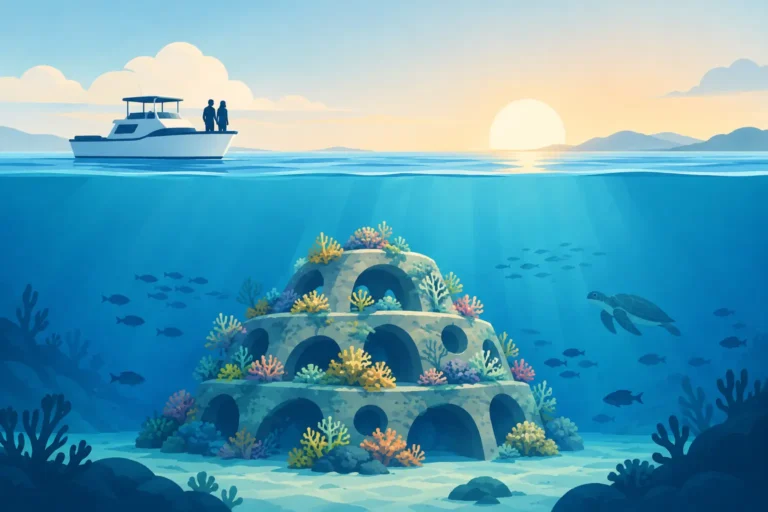
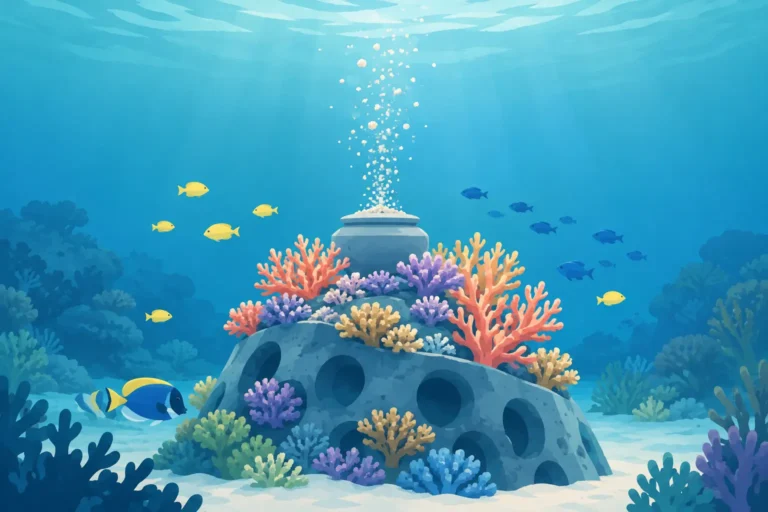
The emotional meaning of a reef is inseparable from its environmental purpose. Carefully designed underwater structures can provide the hard surfaces that many marine organisms need to settle and grow. Over time, algae, oysters, corals, sponges, and other organisms may attach, while fish and smaller creatures find shelter in and around the structure.
This transformation is gradual, which is part of its beauty. A memorial reef is placed with intention, then the sea begins its work. The structure becomes less like an object set apart from nature and more like a small part of a thriving ecosystem.
For environmentally conscious families, this can make an ocean memorial service feel especially personal. The memorial does not merely occupy a place in the sea. It contributes habitat that can serve marine life for more than a century. A person who cared deeply about conservation, boating, wildlife, or a beloved coastal place can leave behind a legacy of renewal.
Still, the environmental promise should be grounded in responsible practice. Placement must occur in approved locations, using materials and methods suited to marine conditions and regulatory requirements. Families should look for clear information about where reefs are placed, how the structures are made, and how the organization handles permits, transportation, and placement logistics.
Choosing the Right Kind of Reef Memorial
The right memorial depends on the story a family wants to carry forward. An individual reef may feel right for one person whose love of the ocean was uniquely their own. A shared memorial can create a tender resting place for a beloved pet, honoring the companionship that shaped a family’s daily life.
For spouses or partners, a dual-sided reef can hold two names and make room for a future placement. That option can be reassuring for couples planning ahead, especially when they want to remain connected in death as they were in life. A family reef may offer even more continuity, creating space for multiple generations to be remembered together beneath the water.
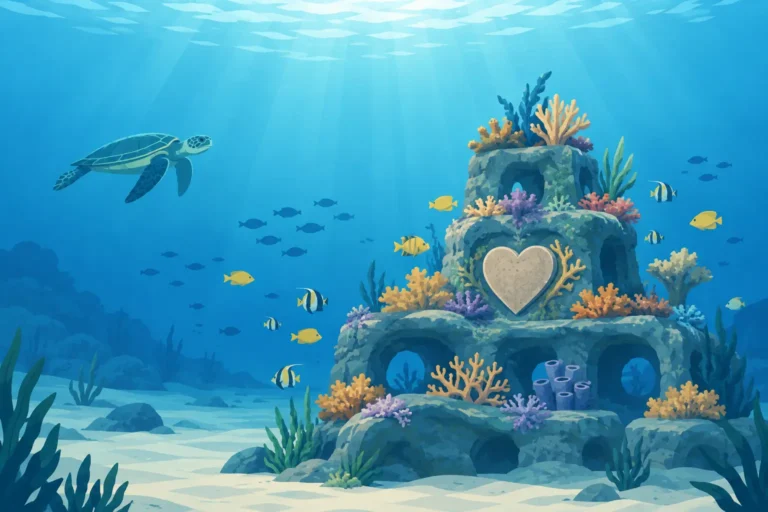
There is also room for artistry. A custom reef memorial may incorporate a family’s vision, cultural traditions, a favorite marine form, or symbols that tell a loved one’s story. The choice is not about selecting the grandest structure. It is about choosing a form of remembrance that feels truthful.
Before deciding, families may want to consider a few practical questions: Will other family members want placement there in the future? Is a personalized plaque important? Does the family hope to visit by boat or dive at the site? Would a simpler shared option better fit the budget? These questions are not meant to rush a decision. They can help turn an overwhelming time into a series of manageable choices.
What Families Need Help With Most
When someone has died, logistics can feel heavy. Cremation coordination, transportation of remains, memorial timing, paperwork, travel, and family communication often arrive all at once. A caring ocean memorial provider should reduce that burden rather than add to it.
The process typically begins with a conversation about the person or pet being honored, the desired placement region, and the type of memorial that feels right. From there, the provider can coordinate with a funeral home or crematory when needed, explain requirements for cremated remains, and organize the placement plan.
Families should also receive lasting documentation. A placement certificate, personalized memorial details, and GPS coordinates create a tangible connection to an underwater site that cannot be seen from shore. These records are especially meaningful for relatives who live far away or cannot attend the service. They provide a way to say, “This is where we remember them.”
At Remember Me By The Sea, the mission is to walk with families through these details while turning each placement into long-term reef habitat. That support can include cremation coordination, transportation planning, placement arrangements, personalized plaques, formal certificates, and help exploring financial assistance when available.
Planning a Service That Feels Personal
A beautiful farewell does not need to be elaborate. It needs to feel like the person who is being remembered. A former captain might be honored with a reading about the sea and a gathering at the marina. A grandmother who loved family beach trips might be remembered through stories from each generation. For a pet, a family may bring a favorite photo, collar, or small keepsake to a shore-side moment of gratitude.
If an on-water gathering is part of the plan, consider the comfort of guests. Boat access, weather, mobility needs, travel distance, and the emotional demands of the day all matter. Some families find a small gathering works best, while others hold a larger celebration of life on land and reserve the placement for close relatives. Neither choice is less loving.
It can also help to make space for children in an age-appropriate way. They may want to draw a picture, share a memory, place a flower in the water where permitted, or learn how reefs provide homes for sea life. A living memorial can give younger family members a gentle image of continuity: someone they love is being honored in a place where life keeps growing.
Questions to Ask Before You Choose
A clear conversation protects both the family’s peace of mind and the integrity of the memorial. Ask whether the reef is permanently placed in approved waters, whether the remains are incorporated into the structure, and what documentation you will receive. Ask how family visits work and whether GPS coordinates are provided.
It is also wise to understand the full scope of care. Does the organization coordinate with your funeral home or crematory? Are transportation and placement logistics included? Can a plaque be personalized? Is there capacity for a spouse, partner, pet, or future family member? Transparent answers make it easier to choose with confidence.
Cost matters, too, and compassionate guidance should include honest discussion of options. A family may choose an individual reef, a shared memorial, or a future-focused family structure based on both meaning and budget. Financial limitations do not make a family’s love any smaller. The right provider will treat that reality with respect.
The sea has always held stories of return, change, and connection. Choosing an ocean memorial service can give a family a place for those stories to continue – not in a monument separated from life, but in a living reef where memory and marine life grow side by side.