How Ashes in Coral Reef Memorials Support New Life
For families drawn to the water, the thought of ashes in coral reef memorials can feel deeply right: a loved one’s memory becoming part of a place filled with movement, color, and life. Yet the phrase can also raise practical questions. Are ashes placed directly on a natural reef? Is it safe for marine life? And how can a family know where to return?
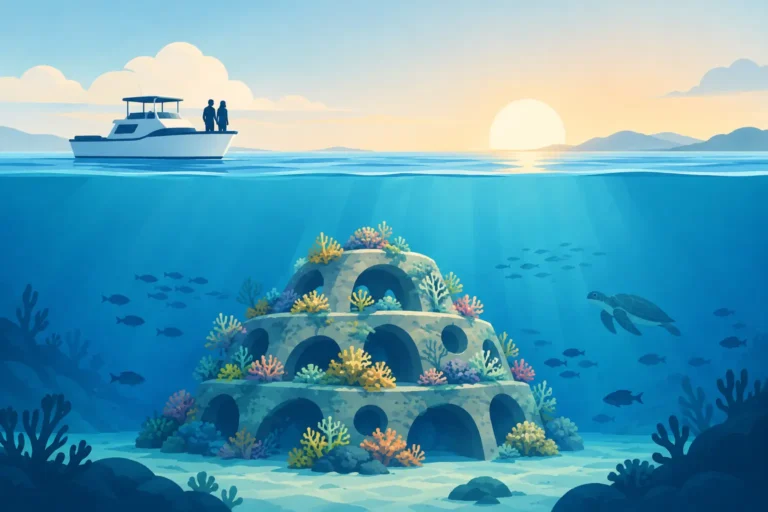
A living memorial reef offers a thoughtful answer. Cremated remains are incorporated into a permanent, marine-safe underwater structure, which is then placed at an approved site to create habitat for fish, coral, and other sea life. Rather than scattering ashes into open water or leaving a family with only a traditional marker on land, this approach creates a lasting place of remembrance with a purpose that continues to grow.
What ashes in coral reef memorials really means
When people say they want ashes placed in a coral reef, they are often expressing a wish to return to the sea and support the ocean they loved. In a responsibly designed memorial program, cremated remains are not simply released onto an existing natural reef. Natural reef systems are delicate, and direct placement is not the same as creating a permitted habitat structure.
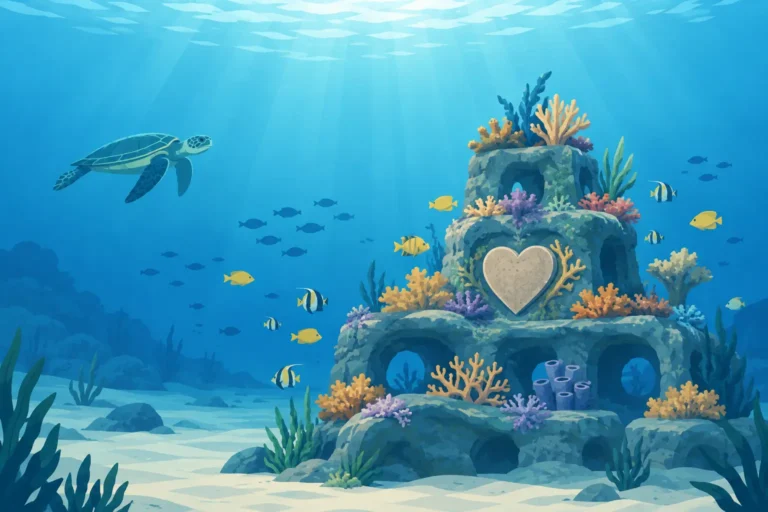
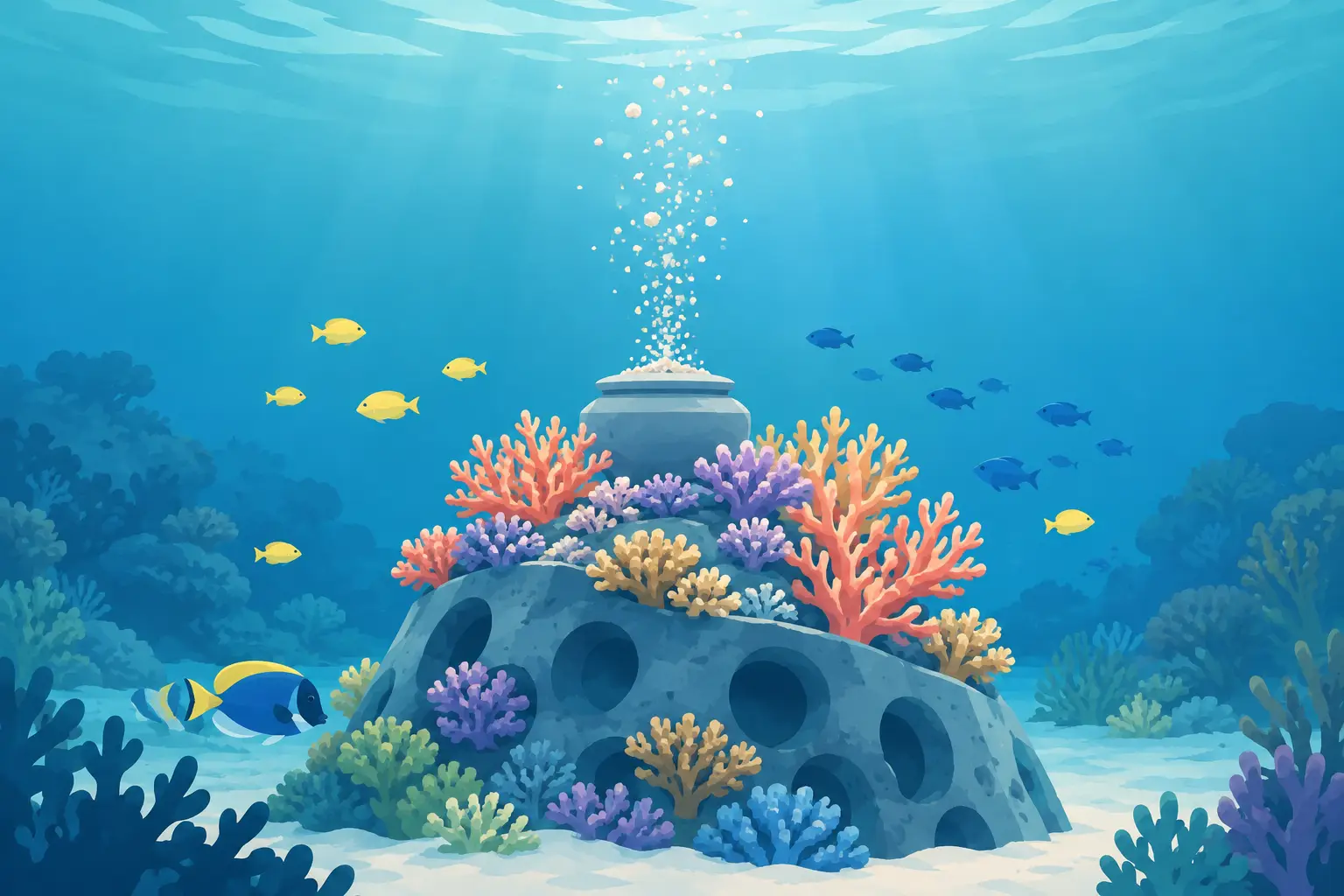
Instead, the remains are respectfully blended into specially formulated, marine-safe concrete as part of a memorial reef. The completed reef is durable enough to remain underwater for generations. Its texture, openings, and shape are designed to give marine organisms places to settle, shelter, and feed. Over time, algae, oysters, coral, fish, and other life can begin to make the structure part of the surrounding underwater community.
This distinction matters. A memorial reef is not only a final resting place. It is an intentional contribution to habitat restoration, placed through an organized process in approved waters. The result honors a person or pet without asking a fragile natural reef to bear the impact.
A memorial that changes with the sea
A cold stone marker remains still. A living reef does not. It becomes home to life that shifts with tides, seasons, and years. Families who choose an ocean memorial often find comfort in that continuity: the person they love is remembered in a place that is not fading away, but participating in renewal.
In the early months after placement, the reef may look much like the structure it was built to be. With time, marine growth can soften its surface and make it part of the underwater landscape. That natural change is one of the most meaningful aspects of a reef memorial. It does not promise a fixed appearance forever. It offers something more alive – a legacy that evolves with the sea.
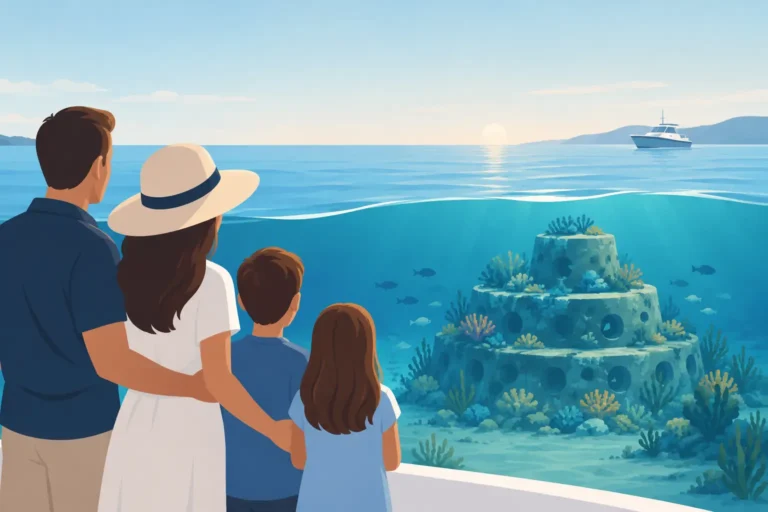
For a sailor, angler, diver, beachcomber, or lifelong coastal resident, that can feel more personal than a cemetery plot. For others, it becomes a peaceful destination for a family boat outing, a quiet shoreline visit, or a future dive. Each family’s relationship with the location will be different, and it does not need to look the same as a traditional graveside visit to be real.
The practical care behind a gentle goodbye
Grief leaves little room for complicated logistics. That is why the process behind a reef memorial should be clear, respectful, and carefully managed from the beginning.
After cremation, the remains are prepared for incorporation into the reef structure. Depending on the memorial selected, a reef can be created for one individual, a beloved pet, a couple, or multiple family members across generations. Some families choose a shared reef when they wish to honor a loved one within a broader community memorial. Others prefer a dedicated structure with room for future placements, allowing a family legacy to remain connected beneath the water.
The reef is then transported and placed at an approved marine location during an organized deployment. Families may be able to attend, depending on the placement region, vessel arrangements, weather, and local regulations. Attendance can be meaningful, but it is never the only way to participate. A farewell can also be held at home, by the shore, or at a memorial gathering before or after placement.
Documentation brings reassurance after the day itself has passed. Families should receive a formal placement certificate and GPS coordinates for the memorial site. A personalized plaque or identifying inscription may also be included, depending on the chosen reef. These details turn an emotional wish into a permanent, verifiable place a family can locate and return to.
Why marine-safe materials and permitted placement matter
The sea is not a symbolic backdrop. It is a living system, and a meaningful ocean memorial must be built with that responsibility at its center.
Marine-safe reef materials are chosen for stability and compatibility with underwater habitat development. A properly engineered reef should remain intact through changing conditions and provide useful surface area and shelter over a long lifespan. Its design must also account for the rules governing artificial reef placement, navigation, water depth, and environmental stewardship in the selected region.
It depends on the location whether a family can visit directly by boat, view the site from shore, or arrange a dive. Water conditions, distance offshore, and local access all shape that experience. A trustworthy provider will explain these realities plainly rather than suggesting every memorial can be reached in the same way.
There is also an emotional trade-off worth considering. A cemetery offers easy, predictable access on land. A memorial reef offers a living ocean setting and ecological purpose, but it may require travel, a boat, or a planned visit. Neither choice is more loving. The right choice is the one that reflects the person being remembered and gives the family a form of connection that feels sustaining.
A place for people, pets, and future generations
The bond between a family and the sea often spans more than one life. A parent may have taught children to fish from a dock. A couple may have spent years sailing the coast. A cherished dog may have run every morning along the beach. These memories are part of why a reef memorial can hold such a special place in a family’s story.
A memorial reef can be designed around that story. A single placement may honor one life with dignity and simplicity. A dual-sided reef can preserve the connection between partners. A larger family reef can create space for future generations, transforming an individual memorial into a shared place of belonging. Pet memorial options recognize that a beloved companion deserves a goodbye as tender and personal as any other member of the family.
Remember Me By The Sea helps families move through these decisions with compassionate guidance, from cremation coordination and transportation to placement details, certificates, and memorial design. The goal is not to make grief feel smaller. It is to make the next step feel less overwhelming and more full of meaning.
Choosing a reef memorial with confidence
When considering ashes in a coral reef memorial, begin with the questions that matter most to your family. Ask where the reef will be placed, how the remains are incorporated, what documentation you will receive, and whether there is an opportunity to attend placement. Understand the memorial’s capacity if you hope it will serve a couple or family over time.
You may also wish to ask how long the structure is expected to last, what habitat features it provides, and how placement complies with local requirements. Clear answers are a sign of care. A memorial decision should never rest on vague promises, especially when it represents both a loved one’s life and a commitment to the ocean.
The most comforting memorials give families something enduring to hold onto. Beneath the water, a reef can become that place: permanent enough to return to, alive enough to change, and created with the hope that love can leave the world a little more beautiful than it found it.