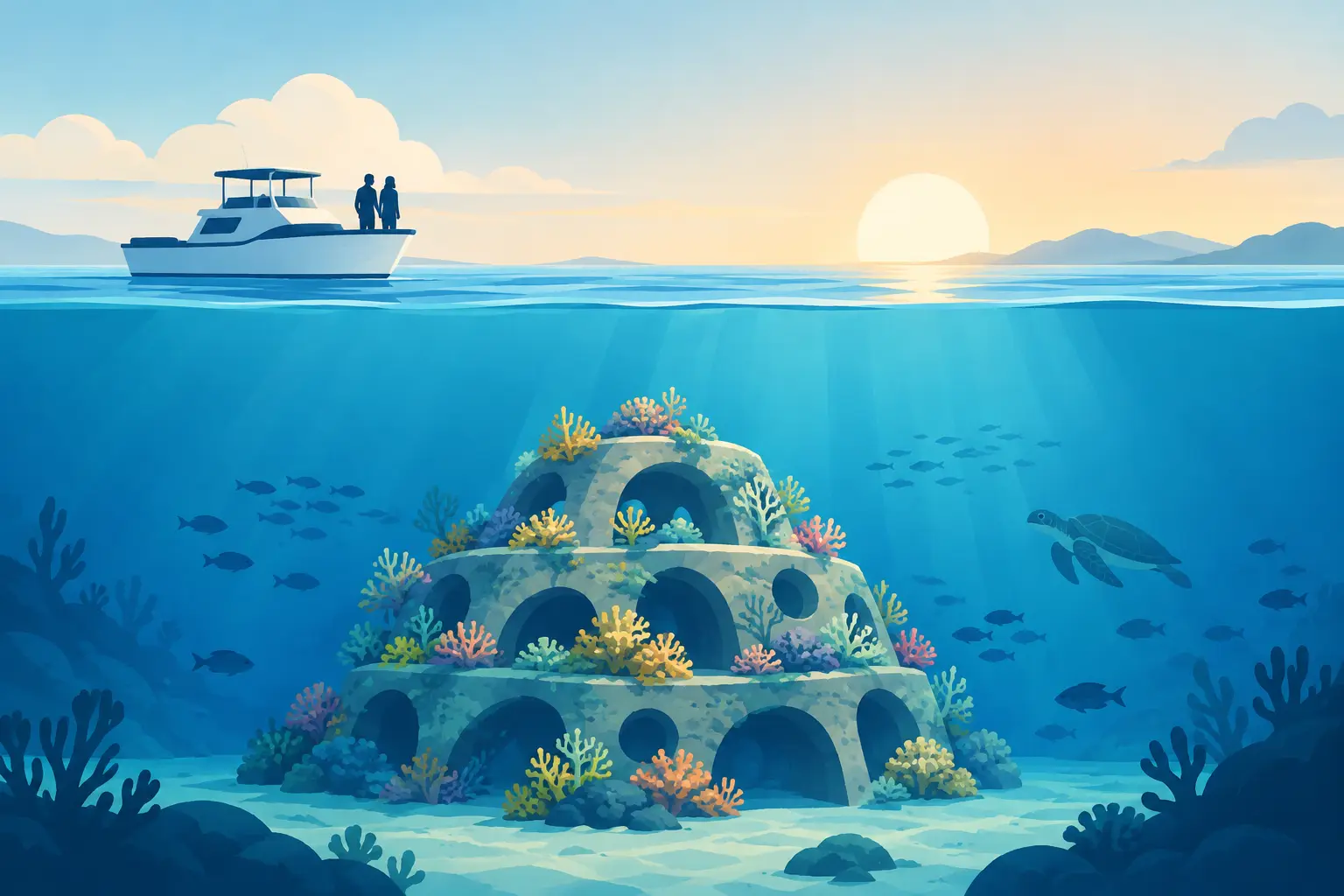
How Do Memorial Reefs Work for Lasting Legacy?
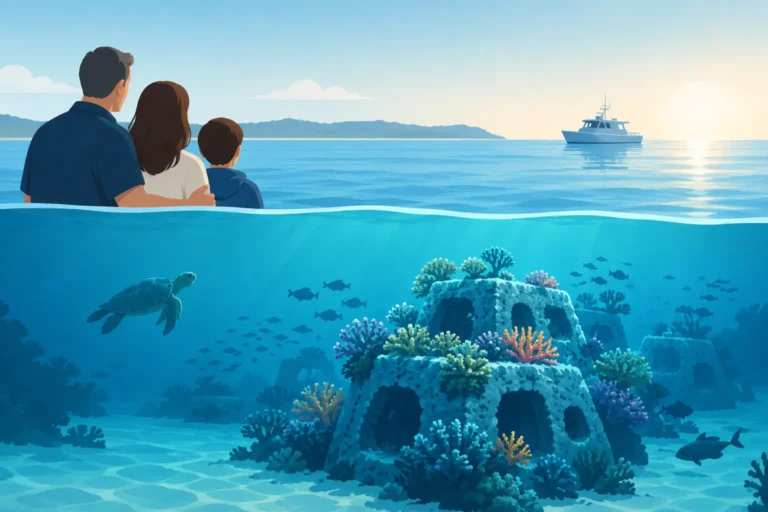
A memorial does not have to be a cold stone standing apart from life. For families who feel most at home near the water, it can become a lasting presence beneath the waves: a place where remembrance helps shelter fish, coral, and other marine life. So, how do memorial reefs work? Cremated remains are respectfully incorporated into a permanent, marine-safe reef structure, then placed in approved ocean waters where it can become part of a growing underwater habitat.
The process is both deeply personal and carefully regulated. A reef memorial gives a loved one, a beloved pet, or an entire family a meaningful place in the sea while creating something living for generations to come.
How Do Memorial Reefs Work From Ashes to Placement?
A memorial reef begins after cremation. The cremated remains are handled with care and combined with a specialized, environmentally appropriate concrete mixture used to create an artificial reef structure. The remains do not dissolve or simply scatter across the ocean. They become a permanent part of the reef itself.
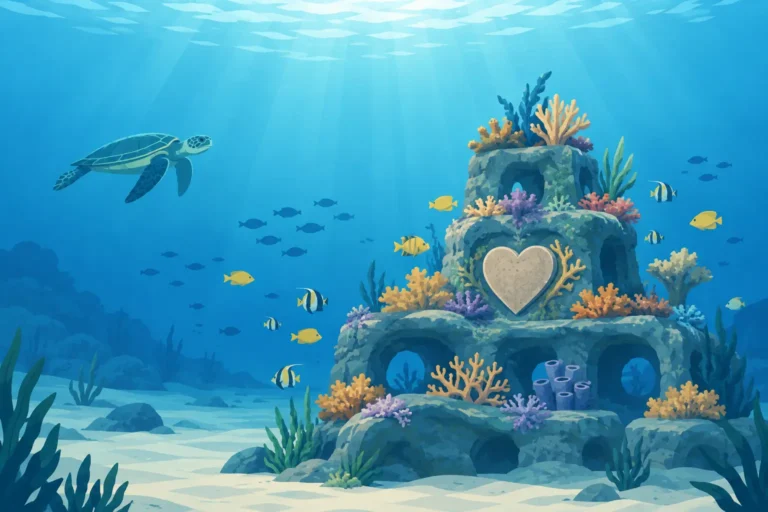
The structure may be designed for one person or pet, a couple, several family members, or a larger custom memorial. Some reefs include a personalized plaque with names, dates, a message, or a favorite phrase. A dual-sided reef can honor two lives together, while a family reef can leave space for future generations to be placed in one shared underwater legacy.
Once the reef has been prepared, it is transported to an approved placement site. Professional crews lower it carefully onto the seabed in a location selected for reef development and long-term stability. Placement is not a casual burial at sea. It follows environmental, maritime, and permitting requirements intended to protect the ocean and support healthy habitat creation.
After placement, families commonly receive formal documentation, including a placement certificate and GPS coordinates for the memorial site. Those coordinates can offer comfort even when a family lives far away. They mark a real, enduring location in the world – not an abstract goodbye, but a place of connection.
A Memorial That Becomes Marine Habitat
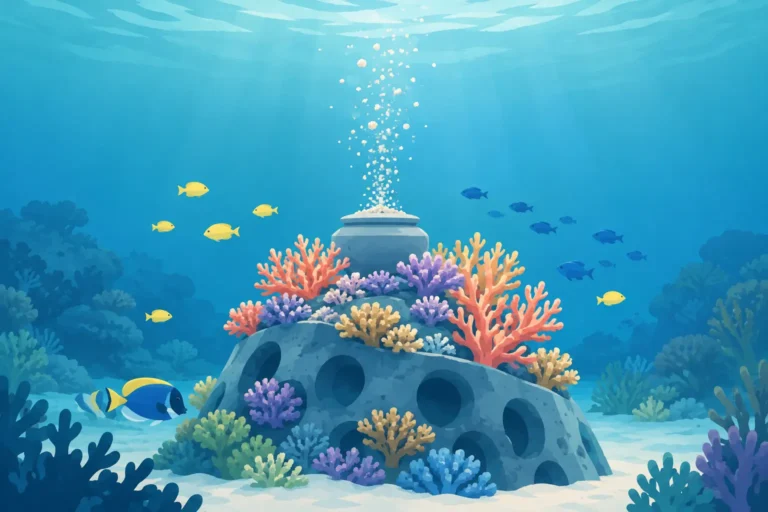
The outer surface of a reef memorial is intentionally made to support marine growth. Over time, algae, marine invertebrates, corals in suitable regions, and other organisms can settle onto the structure. Small fish may use its openings and contours for shelter, while larger marine life may gather around the developing habitat.
This transformation does not happen all at once, and the exact growth depends on water temperature, depth, currents, local species, and the specific placement area. In some locations, visible marine growth begins relatively quickly. In others, the reef develops more gradually. Either way, the memorial is built to remain stable and useful beneath the sea for more than a century.
That is what makes a memorial reef different from scattering ashes. Scattering can be beautiful and meaningful, but it leaves no permanent physical memorial and does not create habitat. A reef memorial gives ashes a lasting purpose. The person or pet being remembered becomes part of a structure that offers refuge and surface area for life in the ocean.
For many families, that continuity brings a gentle kind of peace. Grief does not disappear, but the memorial changes the image of loss. Instead of imagining an ending, loved ones can picture a living reef becoming more established with each passing year.
What Happens on Placement Day?
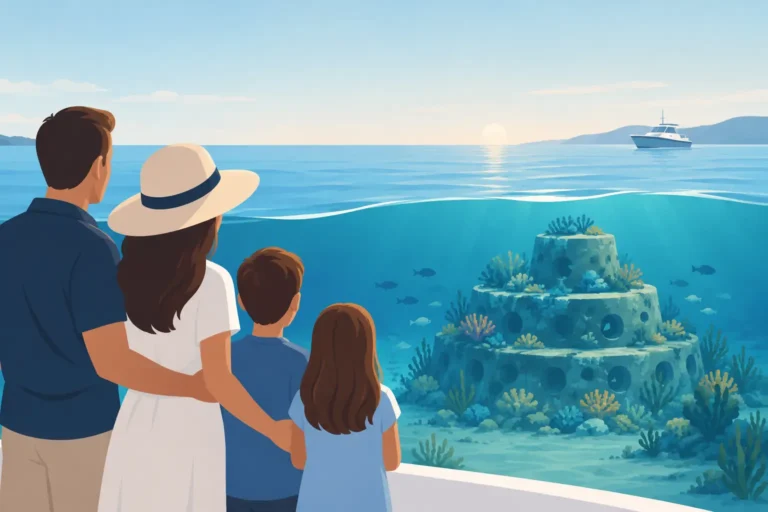
Placement day can be private, ceremonial, or simply handled by the professional team, depending on the family’s wishes and the location’s rules. Some families choose to attend by boat and share readings, prayers, music, flowers, or quiet reflection before the reef is lowered. Others prefer to say goodbye earlier in a more intimate setting and receive confirmation once placement is complete.
There is no single right way to take part. A family coping with an unexpected loss may need a provider to manage every logistical detail. Someone planning ahead may want to make thoughtful choices about the design, inscription, and future family capacity. Both needs deserve the same patient care.
At Remember Me By The Sea, the process can include cremation coordination, transportation, placement logistics, personalized memorial details, and documentation after the ceremony. That support matters because decisions after a death can feel overwhelming. Families should not have to become experts in marine permits, vessel scheduling, or reef construction while they are grieving.
Can Families Visit a Memorial Reef?
Yes, although the experience depends on the reef’s location and depth. Families may visit a memorial site by boat using the provided GPS coordinates. In some areas, divers and snorkelers may be able to visit directly if conditions, access, certification, and water depth allow. Others may choose to honor the location from the surface, bringing flowers or simply pausing over the coordinates together.
A memorial reef is not meant to be maintained like a gravesite. The ocean does that work in its own way. Marine life gradually changes the reef’s appearance, making it more textured, colorful, and integrated with its surroundings. For families, this can be especially meaningful: the memorial is not left behind or forgotten. It is continually becoming something more alive.
Weather, boating access, and local regulations can affect visitation, so it helps to think of the coordinates as a point of connection rather than a promise of easy access at every moment. Some loved ones visit often. Others keep the location close in their hearts and return only on special dates.
Are Memorial Reefs Safe for the Ocean?
When properly designed and placed, memorial reefs are created specifically to be safe, durable additions to approved marine environments. They use marine-safe materials rather than objects that could break down, release harmful substances, or shift unpredictably on the seafloor. Their weight and engineered form help them remain in place, while their textured surfaces and openings encourage habitat use.
Responsible placement is essential. A reef memorial should be deployed only in authorized areas, with appropriate environmental review and coordination. It should never be placed on a natural coral reef, seagrass bed, protected habitat, navigation channel, or other sensitive area where it could cause harm.
There is also a practical trade-off to understand. A memorial reef supports restoration by adding hard substrate and shelter, but it is not a substitute for protecting existing natural reefs from pollution, warming water, and destructive activity. Its value is real, yet it is part of a broader commitment to ocean stewardship. Families who choose one are giving their loved one’s memory a tangible role in that commitment.
Who Can Be Memorialized in a Reef?
Memorial reefs can honor people and pets. An individual reef may be right for a single cherished life, while shared options can bring spouses, partners, siblings, parents, children, and even multiple generations together in one designated place. Families often appreciate the ability to reserve future capacity, especially when they want a shared legacy rather than separate memorial decisions years apart.
A pet memorial can be equally heartfelt. For many people, a dog, cat, horse, or other companion was family in every sense that matters. Choosing a living ocean memorial can reflect the joy, loyalty, and love that animal brought into a home.
The best choice depends on the family story. A small, private reef may feel right for someone who valued simplicity. A larger custom artistic reef may better reflect a person with a strong connection to the sea, diving, fishing, sailing, or coastal conservation. What matters is not choosing the grandest option. It is choosing a memorial that feels true.
Planning Ahead Can Be an Act of Care
Preplanning a memorial reef can spare loved ones from difficult decisions later. It allows a person to express their wishes clearly, select an appropriate reef type, decide who may be included, and consider the kind of message they want to leave behind. It can also make room for practical conversations about cremation, cost, and the preferred placement region.
For families arranging a memorial after a loss, there is no need to have every answer immediately. Start with the questions that feel most important: Who should be honored? Would a private or shared reef feel right? Is a coastal location meaningful? Would future family placements matter?
A life connected to the sea can continue as a place of shelter, beauty, and renewal. That thought will not remove sorrow, but it can offer something steady to hold: a loved one remembered not only by name, but by the life their memorial helps sustain.