Ocean Ashes Ceremony: A Living Way to Remember
An ocean ashes ceremony can offer something many families seek after a loss: a peaceful farewell that feels connected to the person they love. For someone who felt at home near the shore, loved to fish, sail, dive, or simply watch the horizon, the sea can feel less like a final destination and more like a place of continuing presence.
There is no single right way to say goodbye. Some families choose to scatter ashes over open water in a private moment. Others choose a permanent memorial reef, where cremated remains become part of a marine-safe structure designed to support ocean life for generations. Both can be meaningful. The difference is in what remains afterward: a memory carried with you, or a living place beneath the water that can be documented, revisited, and shared.
What an Ocean Ashes Ceremony Can Mean
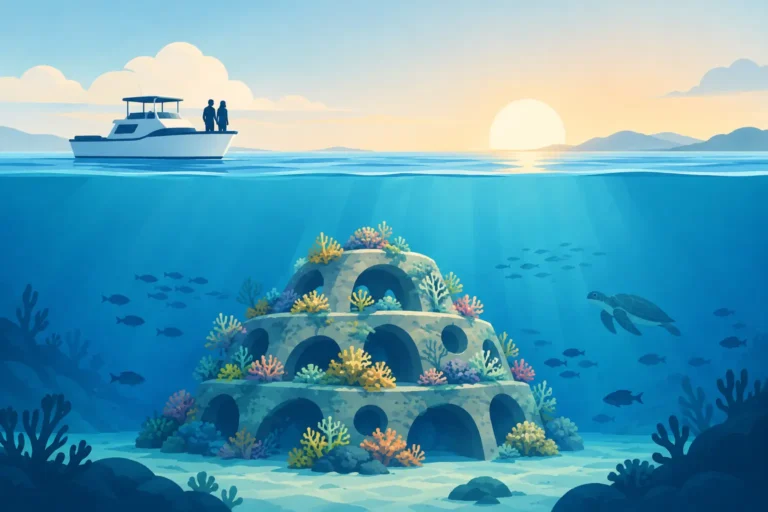
An ocean ceremony is often quieter and more personal than people expect. It may take place from a boat with a small group of family and friends, or it may be part of a professionally coordinated reef placement. There can be music, a reading, a prayer, a toast, or simply a few words spoken into the sea. There can also be silence.
The most meaningful ceremonies tend to reflect the person being honored rather than follow a fixed script. A lifelong fisherman might be remembered with stories from the water. A grandparent might be honored as children and grandchildren place flowers or share handwritten notes. For a beloved pet, a family may bring a favorite photo, collar, or toy to hold close during the farewell.
The ocean’s movement can be comforting, but it also makes a ceremony feel different from visiting a cemetery. The water will not remain still. Weather, tides, and boating conditions matter. For many families, that is part of its beauty: the ceremony recognizes that love continues to move through a changing world.
Scattering Ashes or Creating a Memorial Reef
Scattering cremated remains at sea is a simple and time-honored choice. It can be right for families who want an intimate experience with few logistics and no need for a permanent physical marker. If scattering is your plan, it should be done responsibly and in accordance with applicable federal, state, and local requirements. Open-water locations, distance from shore, vessel access, and reporting requirements can all affect what is permitted.
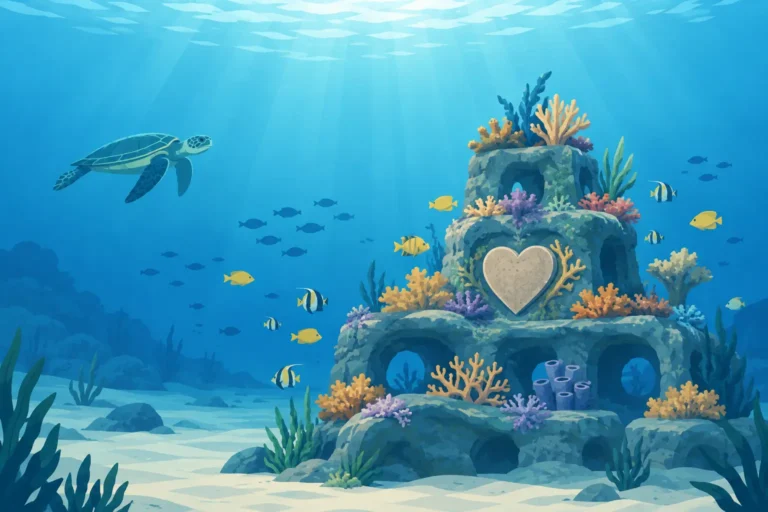
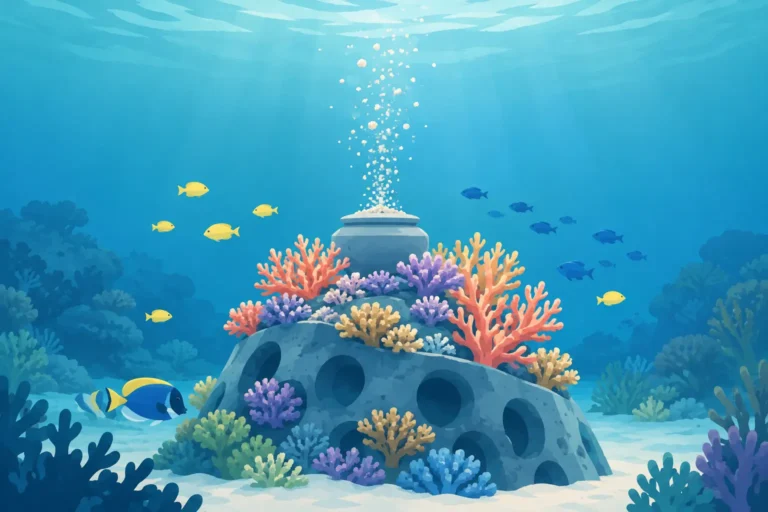
A living memorial reef is a different kind of ocean ashes ceremony. Rather than releasing ashes directly into the water, cremated remains are incorporated into a permanent, marine-safe underwater reef. The structure is placed in approved waters and becomes habitat where coral, fish, and other marine life can gather and grow.
This option can be especially meaningful for families who want a lasting destination. A personalized plaque, GPS coordinates, placement certificate, and photographs can give loved ones a tangible connection to the memorial. Instead of cold stone, there is a structure that supports life beneath the surface for more than a century.
Neither choice is more loving than the other. It depends on what matters most to your family. Scattering may feel beautifully simple. A reef may feel right when permanence, ecological restoration, and a place for future generations to return are central to the decision.
Planning the Ceremony With Less Stress
Grief can make even small decisions feel heavy. The kindest approach is to separate the emotional choices from the practical ones, then allow someone experienced to help carry the details.
Start by thinking about who should be present and what would feel true to your loved one. A ceremony can be held soon after cremation, on a birthday or anniversary, or at a later time when family members can travel. There is no deadline for remembrance.
Next, consider the setting. Some families want a boat-based farewell with immediate relatives. Others prefer a placement event managed by a memorial provider, with photos and documentation provided afterward. If a reef memorial is chosen, the placement itself may be coordinated around safe marine conditions and approved deployment schedules. This can mean waiting for the right date, but it also means the placement is handled with care and according to environmental standards.
It helps to decide in advance whether you would like guests to participate actively. You might invite each person to share one memory, read a short passage, place a flower in the water where allowed, or write a letter to keep as part of a family memory box. A small ritual can give structure to a day when emotions may be difficult to predict.
Practical Questions Families Often Have
Can cremated remains be placed in the ocean?
Yes, but the method and location matter. Ocean scattering and reef placement are subject to rules intended to protect waterways, coastlines, navigation, and marine environments. A reputable provider should explain how the placement is handled, where it occurs, and what documentation you will receive.
For a memorial reef, ask whether the structure is specifically designed for marine use, placed in authorized waters, and built to endure ocean conditions. A meaningful tribute should also be a responsible one.
Can pets be included?
For many people, a pet is family. Some memorial options are designed specifically for beloved animals, while others can accommodate the cremated remains of both people and pets. If you hope to create a shared tribute, ask about capacity, placement policies, and whether future additions are possible.
A pet memorial can be especially comforting for children. It offers a gentle way to explain that a cherished companion has become part of a place where life continues to grow.
What if our family lives far from the coast?
You do not have to live nearby to choose an ocean memorial. Families often coordinate arrangements from across the country, then travel for a ceremony if they wish. Others prefer to have the placement professionally managed and receive photographs, GPS coordinates, and a formal certificate afterward.
There is a trade-off. Attending can bring a powerful sense of presence, while remote coordination may be more practical during a difficult season. Neither diminishes the love behind the decision.
Will there be a place to visit?
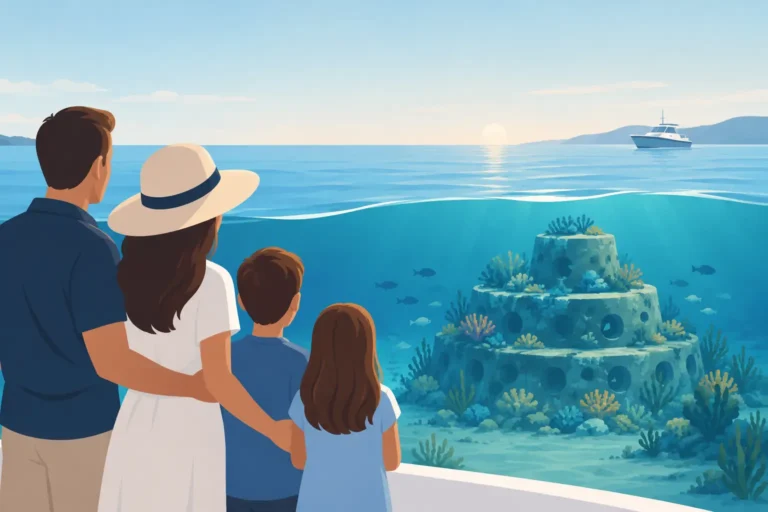
A reef is underwater, so visiting may look different from visiting a gravesite. Some loved ones return by boat, some dive or snorkel where conditions and access allow, and others visit the nearby coastline. GPS coordinates create a meaningful point of connection even when a family cannot physically see the memorial.
Over time, many families find comfort in knowing that the site is not static. It becomes part of a living habitat, shaped by the rhythms of the sea.
Choosing a Provider You Can Trust
Because an ocean memorial combines funeral decisions, cremated remains, transportation, marine placement, and environmental responsibility, the provider matters deeply. Look for clear explanations of the process, the placement region, what is included, and how your loved one’s remains are cared for from start to finish.
You should also feel comfortable asking practical questions about timing, family attendance, financial assistance, memorial personalization, future family placements, and the records you will receive. Compassion should never come at the expense of clarity.
Remember Me By The Sea was created around the belief that memorialization can be both deeply personal and restorative. Through living memorial reefs, remembrance helps create durable habitat while giving families a documented, permanent place of connection in the ocean.
Giving the Day Its Own Shape
You do not need to fill an ocean ashes ceremony with formal words to make it memorable. A favorite song played softly on the ride out, a story told by a sibling, a handful of flowers, or a moment of shared quiet can be enough. If tears come, they belong there. If laughter comes, it belongs there too.
When you are ready, let the ceremony reflect the life that was lived and the love that remains. For a person whose spirit was drawn to the water, a living ocean memorial can offer a gentle, joyful goodbye: not an ending marked only by absence, but a lasting act of care that continues beneath the waves.